
FAQ
General FAQ
- What is ZapLoc?
- Are ZapLoc and ZapZorb safe?
- Are super absorbent polymers biodegradable?
- Are super absorbent polymers compatible to the environment?
- What is the significance of fungi attached to the degradation processes of super absorbent polymers?
- How do you interpret biodegradation by being prone to naturally occurring degradation mechanisms?
- What is the time frame for this degradation process of super absorbent polymers?
- What is the distinguishing feature of super absorbent polymers?
Industrial products FAQ
- What is ZapZorb?
- Is ZapZorb safe?
- What types of waste streams does ZapZorb solidify best?
- Can ZapZorb effectively solidify petroleum sludges?
- What common constituents adversely impact ZapZorb's performance?
- Does ZapZorb have a "Swell Factor?"
- What is a typical admix ratio?
- Is ZapZorb-solidified waste accepted at Subtitle D landfills?
- What industries will benefit the most from using ZapZorb for their liquid waste solidification?
1. What is ZapLoc?
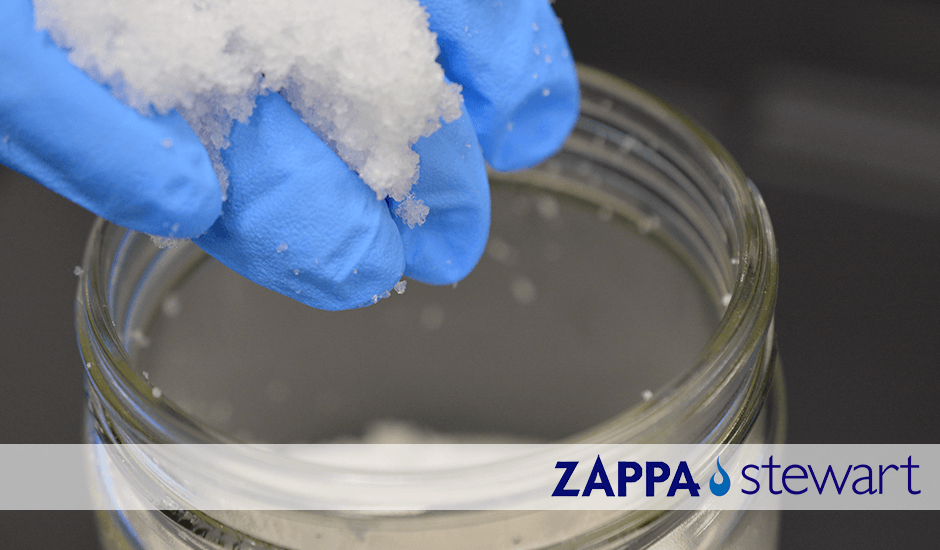
ZapLoc is a specifically designed and blended Super Absorbent Polymer (SAP) that has been developed as a medical waste solidifier by Zappa Tec and the leading international producer of SAPs, Degussa.
2. Are ZapLoc and ZapZorb Safe?
Super Absorbent Polymers have historically been used in hygiene products (feminine and baby care) and in agricultural and food packaging.
3. Are super absorbent polymers biodegradable?
In order to ensure that the desired performance of super absorbent polymers will last for a long time period under use conditions, a certain stability is indispensable. This includes the stability against microbial attack. Indeed, practically no biodegradation was observed in standardized test systems. Similar to the most recalcitrant biological polymer, lignin, super absorbent polymers in general cannot be internalized by microorganisms due to the size and insolubility of the polymers. However, basic research has shown that it is prone to naturally occurring degradation mechanisms. Some microorganisms (e.g. fungi) are equipped with a unique nonspecific degradation system that enables them to degrade lignin and a variety of environmental pollutants. Investigations have demonstrated that these microorganisms are capable of degrading super absorbent polymers by solubilization, internalization, and subsequent mineralization of the degradation products. Therefore, there is sufficient and increasing evidence that super absorbent polymers do not constitute a persistent, non-degradable man-made polymer.
4. Are super absorbent polymers compatible to the environment?
Yes, they are. In-depth ecotoxicological testing has provided no evidence for significant adverse effects of super absorbent polymers to marker organisms in water or soil. Super absorbent polymers do not contaminate plants and soils, other living organisms, or ground water due to their inert polymeric structure. Basic research has shown that they are prone to naturally occurring degradation mechanisms and that some microorganisms are capable of degrading super absorbent polymers by solubilization, internalization, and subsequent mineralization. If degradation takes place, the degradation products and water soluble metabolites are not toxic. Therefore, super absorbent polymers are compatible and safe to the environment, and there is sufficient evidence that they do not constitute a persistent man-made polymer.
5. What is the significance of fungi attached to the degradation processes of super absorbent polymers?
Soil fungi exceed other soil organisms including bacteria with respect to the number of species and the total amount of biomass in soil all over the world. Even in arable land, complex fungi communities are present and are mainly involved in the degradation of plant remnants containing lignin like straw, wooden tissues of dead plants, and roots. Nevertheless, compact wood could only be degraded of specialists, the so-called basidiomycetes. The typical location of basidiomycetes is the woodland in general but also in arable land lignin degrading basidiomycetes are present. Lignin is - like Super Absorbent Polymer - a complex structured polymer, which makes them relatively persistent against microbial attack and therefore poorly degradable.
6. How do you interpret biodegradation by being prone to naturally occurring degradation mechanisms?
Scientific research gives evidence that super absorbent polymers - like lignin - become part of the dead organic matter of soil: the so-called humus fraction. One part of the humus is the straw fraction containing easy degradable cell contents and less easy degradable cell wall components like cellulose and lignin. The straw fraction supplies the nutrients for the soil organisms. The other part of the humus are the humic substances comprising altered complex organic substances that are poorly degradable. Like super absorbent polymers, humic substances are amorph organic colloids with a great surface. Both are important for the water management in soil and for ion exchange, buffer function, and binding of nutrients. Lignin degrading fungi are capable of depolymerizing super absorbent polymers, causing solubilization. While the low molecular fraction of the soluble polymer chains were internalized and subsequently mineralized, the high molecular fraction will be adsorbed by soil particles and fixed in the humus fraction. Therefore, super absorbent polymers, like the humic substances, will become part of the humus fraction of soil by time without any adverse effects on the nature of the soil.
7. What is the time frame for this degradation process of super absorbent polymers?
At the time being, it is not possible to track the transition of super absorbent polymers from an additive to soil into the humus fraction under naturally occurring conditions by analytical means. The process is assumed basing on theoretical considerations, many years of experience, and scientific data from laboratory examinations. While depolymerization of the polymer by fungi occurred within few weeks under optimum conditions, a time period of several years should be calculated under relevant use conditions in the field. The age of different divisions of the humic fraction is about 10 - 100 years for less altered fragments of lignin and about 100 - 1000 years for immobilized humic acids.
8. What is the distinguishing feature of super sbsorbent polymers?
According to the principles of environmental hygiene, it is demanded not only to keep the environment free of harmful contaminants but also to minimize the introduction of useless and avoidable ones. With the development of super absorbent polymers, it has been possible to fulfill this minimum requirement particularly for the field of food production. In particular, this is relevant for the monomeric acrylamide due to its toxicological properties. The contents of technical unavoidable residuals of monomeric acrylic acid and acrylamide are reduced to an extent were due to toxicological reasons; no restrictions for food production exists. As both monomers are characterized by high mobility and rapid biological degradation, harmful effects on soil are not expected.
1. What is ZapZorb?
ZapZorb is a specially designed and blended form of Super Absorbent Polymer (SAP) that has been developed by ZappaTec and the leading international producer of SAP based in Germany: Degussa/Evonik.
2. Is ZapZorb Safe?
SAP have a long history of safe use in a variety of consumer offerings including baby diapers, adult incontinence products, feminine care products, agricultural soil supplements, and food packaging.
3. What types of waste streams does ZapZorb solidify best?
ZapZorb works well with almost all waste streams that have an aqueous component. It is less effective with acidic streams (pH less than 4) and with streams that contain elevated sodium (such as dredge sediments from saltwater). Waste solidification facilities throughout the United States use ZapZorb daily to economically solidify waste streams. Please see our case studies to learn more about out success stories.
4. Can ZapZorb effectively solidify petroleum sludges?
Petroleum and water sludge mixtures most often respond very well to ZapZorb. For example, tank bottoms from No. 6 fuel oil tanks will solidify easily, but lighter petroleum distillates are more challenging and require additional reagent.
5. What common constituents adversely impact ZapZorb's performance?
Low pH streams (pH less than 4) and elevated sodium levels reduce ZapZorb's overall effectiveness. Acidic waste streams may require elementary neutralization prior to solidification.
6. Does ZapZorb have a "Swell Factor"?
ZapZorb's "Swell Factor" is roughly 1%. In other words, the solidified waste does not expand to create a larger volume like you’d observe when using saw dust, cement kiln dust, or other additives most often used to solidify waste streams. Using ZapZorb keeps the actual volume of waste that you must transport to the landfill or incineration facility at an absolute minimum.
7. What is a typical admix ratio?
Non-hazardous sludges and dredge sediments usually have an admix ratio ranging from 1% to 4% by weight. In most cases, dredge projects may require substantially less material by draining off the free water prior to solidification.
8. Is ZapZorb-solidified waste accepted at Subtitle D landfills?
Yes. Proper use of ZapZorb ensures that solidified waste passes paint filter tests. The material is non-biodgradable (40 CFR 264.314 (e)) and does not re-release liquids.
9. What industries will benefit the most from using ZapZorb for their liquid waste solidification?
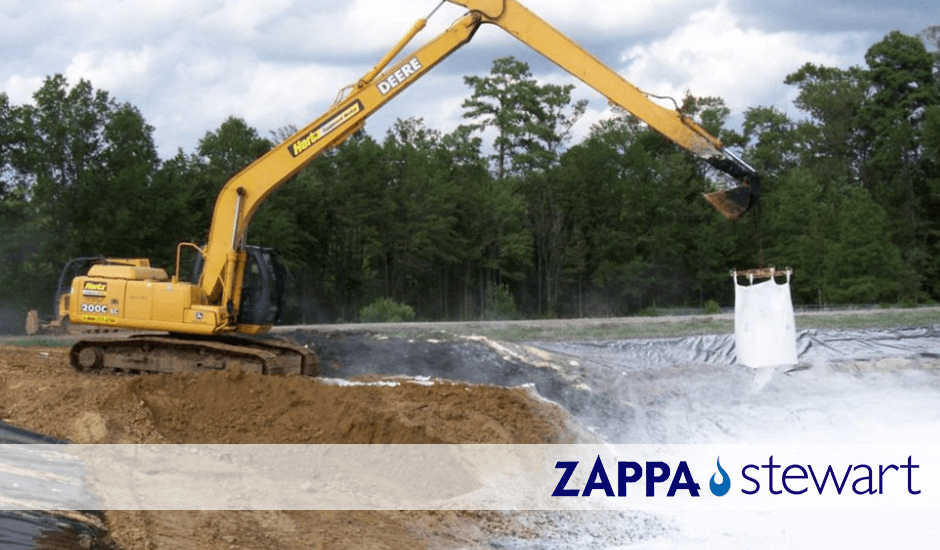
Industrial service contractors, landfills, hazardous and non-hazardous treatment facilities, remediation contractors, low-level radioactive waste contractors. Please see our case studies to learn more.